 Zhanghu
Zhanghu
Flavour
Light fragrance, full body, takes many infusions
Zhanghu is in Gukeng, Yunlin, at about 850 metres — the lower end of Gukeng's tea villages.
Eight hundred and fifty metres is an awkward height. It is not high enough to command a high-mountain price, yet it is much colder than a lowland garden, so the tea does build some body. The local answer is to take the firing to two and let a little fire fill in the rest.
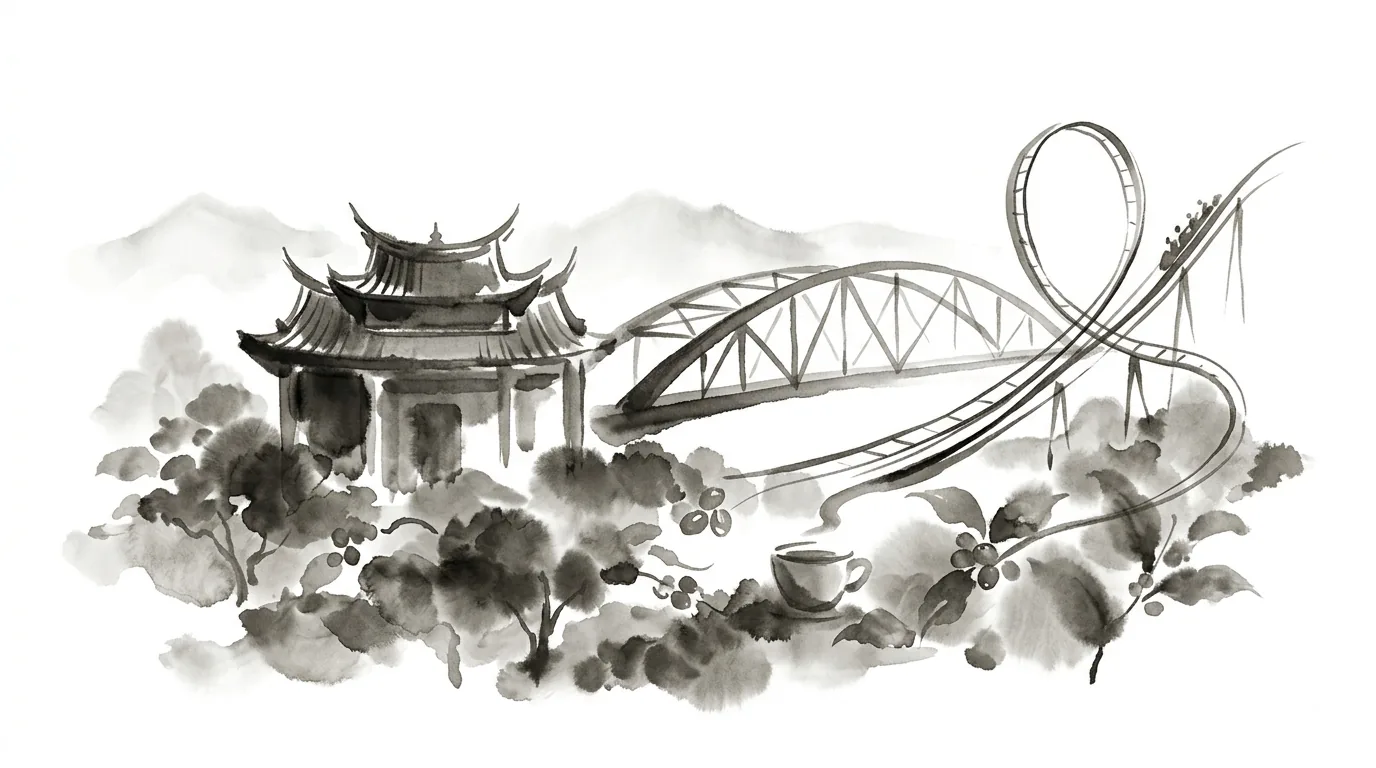
Gukeng is known for coffee, and many people do not realise the same hills grow tea. Both crops share the slope.
⚠️ When buying Gukeng tea, check the village: Zhanghu, Huashan, Caoling and Shibi run anywhere from eight hundred to fifteen hundred metres.
Fair priceverified
One jin is 600 g. Below NT$800, be sceptical.
A reasonable range is NT$1,400–2,800 per 600 g. Below NT$800, ask more questions.
What to ask when buying this
Spring and winter lots fetch the highest prices and the best aroma; summer and autumn are a step down in both.
If they will not let you taste but want you to buy 600 g of something expensive, walk away. It is the simplest and most effective filter there is.
A scannable producer record beats any verbal assurance.
Production date, expiry, origin of raw material, seller name and phone — if any is missing, do not buy.
Specifications
About the origin
In Zhanghu Village, Gukeng Township, Yunlin. Opened early, like Huashan nearby, and machine-picked, which gives it a high yield per hectare.
These figures will be updated if they change.
Brewing
Why this temperature
Ball-rolled oolong is tightly wound, and the first pour only reaches the outside of the pellet, so it needs water close to boiling to open at all. If it does not open, the later steeps swing between thin and heavy. The first and second steeps often take the same time or less, because the leaf does not truly unfurl until the second.
Temperatures follow the official category guidance. Source: TRES — Effects of water quality and temperature on tea liquor
Common mistakes with this tea
95°C or above. Too cool and the roast aroma never opens, leaving it flat.
Rolled-ball leaf needs the first infusion to open up; the second is then shorter.
Best drunk within two months.
The most common beginner regret is buying 600 g on the first try. Buy a jin only after you know you like it.
What to eat with it
Glutinous rice clings and the sweetness lingers on the tongue. A tea with some astringency clears it away.
This one is Taiwan-only — not available overseas
Location accuracy: named locality (23.6060, 120.6500). This marks the growing area, not one specific garden.
Yunlin Tea Region5
What there is to do here
3 routes Day trip Gukeng: Huashan and Zhanghu・Gukeng: Caoling and Shibi・Linnei
One township, coffee at 400 m and high-mountain tea at 1,200. Gukeng lets the two get on with their own business: Huashan and Zhanghu turned to garden cafés and hill trails, while Caoling and Shibi kept making high-mountain tea. Linnei sits lower still, 200 to 400 m.