A royal tea table in the hills: “Tea and Kings” at the Pinglin Tea Museum
The only public museum in Taiwan devoted to tea, built as a southern-Fujian courtyard house in the Anxi manner. This year’s special exhibition, “Tea and Kings”, follows the leaf out of the East and into the courts of the West — and along the way, wagashi, yakgwa and the afternoon tea tray turn out to be branches of one story.
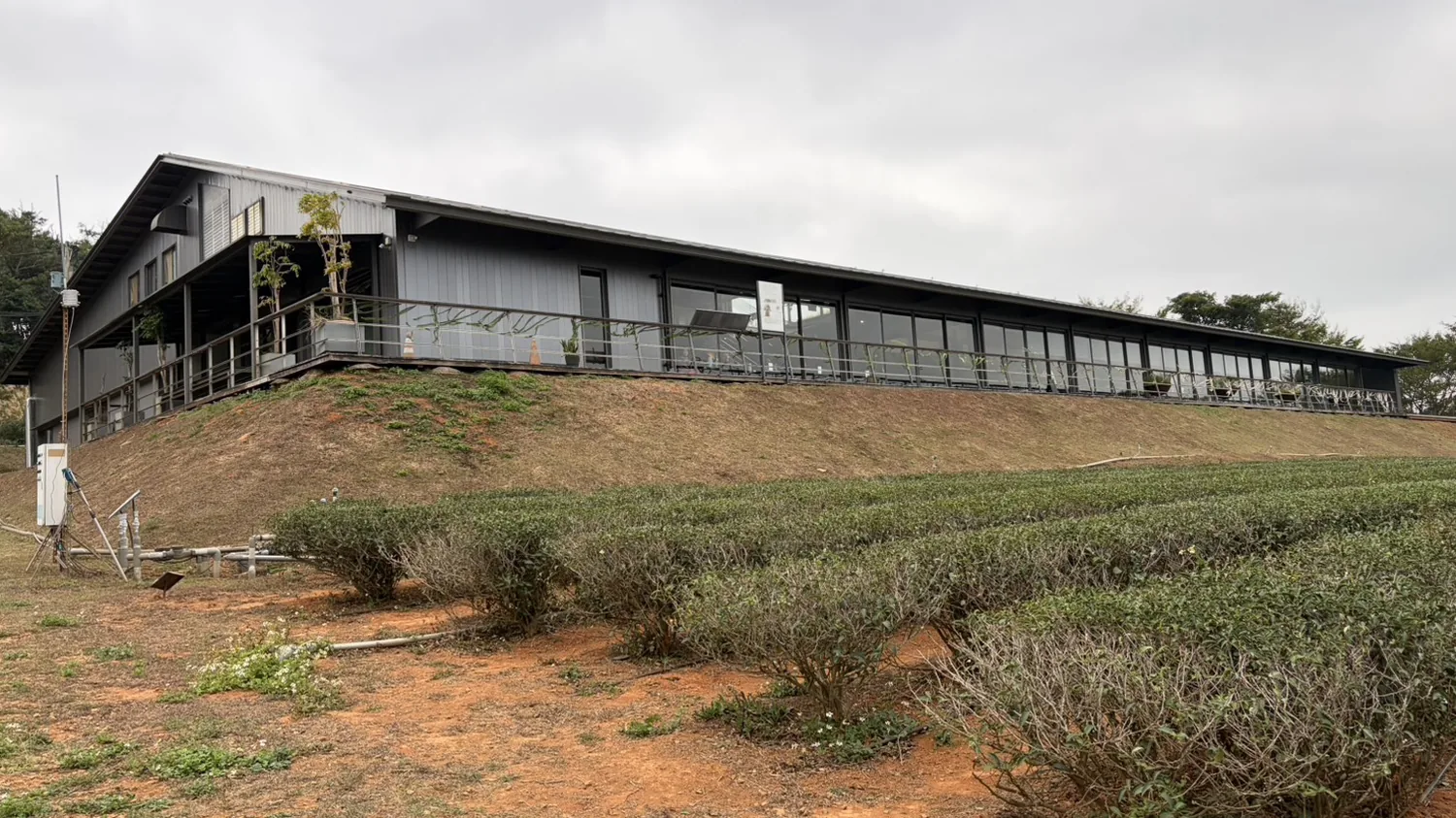
The building deserves a minute before you go in: a southern-Fujian courtyard house in the Anxi manner, white walls, dark tiles, an open court in the middle. Pinglin grows Baozhong, and Anxi is where the cultivars and the methods came from — building it this way tells half the history before you are through the door.
Getting there, and what it costs
| What | Detail |
|---|---|
| Bus | From MRT Xindian: bus 923 or Green 12, get off at Pinglin Junior High. |
| Coach | From exit 4 of MRT Dapinglin: the 9028 Metropolitan Star coach. |
| Driving | There is a free car park beside the museum. |
| Admission | NT$80 full; free for New Taipei residents. |
| Special exhibition | “Tea and Kings” until 18 October 2026. |
How a leaf walked into the palaces
The spine of the show is the leaf’s journey west: out of Asia, along sea and trade routes, and finally onto the tables of European courts. What makes it worth walking slowly is that it never arrives unchanged — every court it reached redefined what refinement meant, in vessels, in timing, and in what was served alongside.
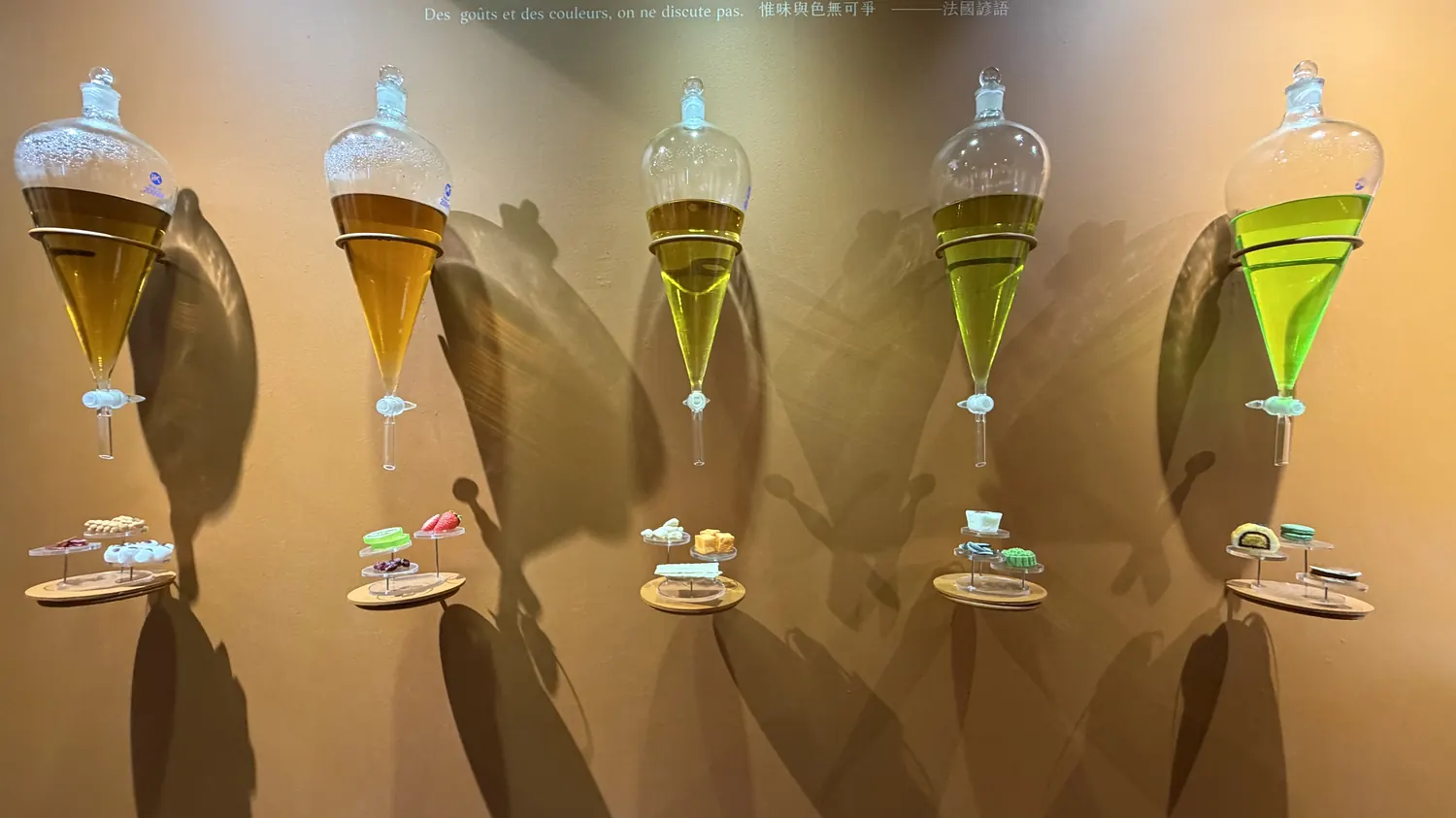
This one row compresses the whole argument of the exhibition into a sentence: colour decides what goes with it. The darker the liquor and the heavier the roast, the more it can carry something rich and fatty; the paler and greener it is, the lighter what sits beside it has to be, or the tea disappears under it. Just what every court worked out for itself.
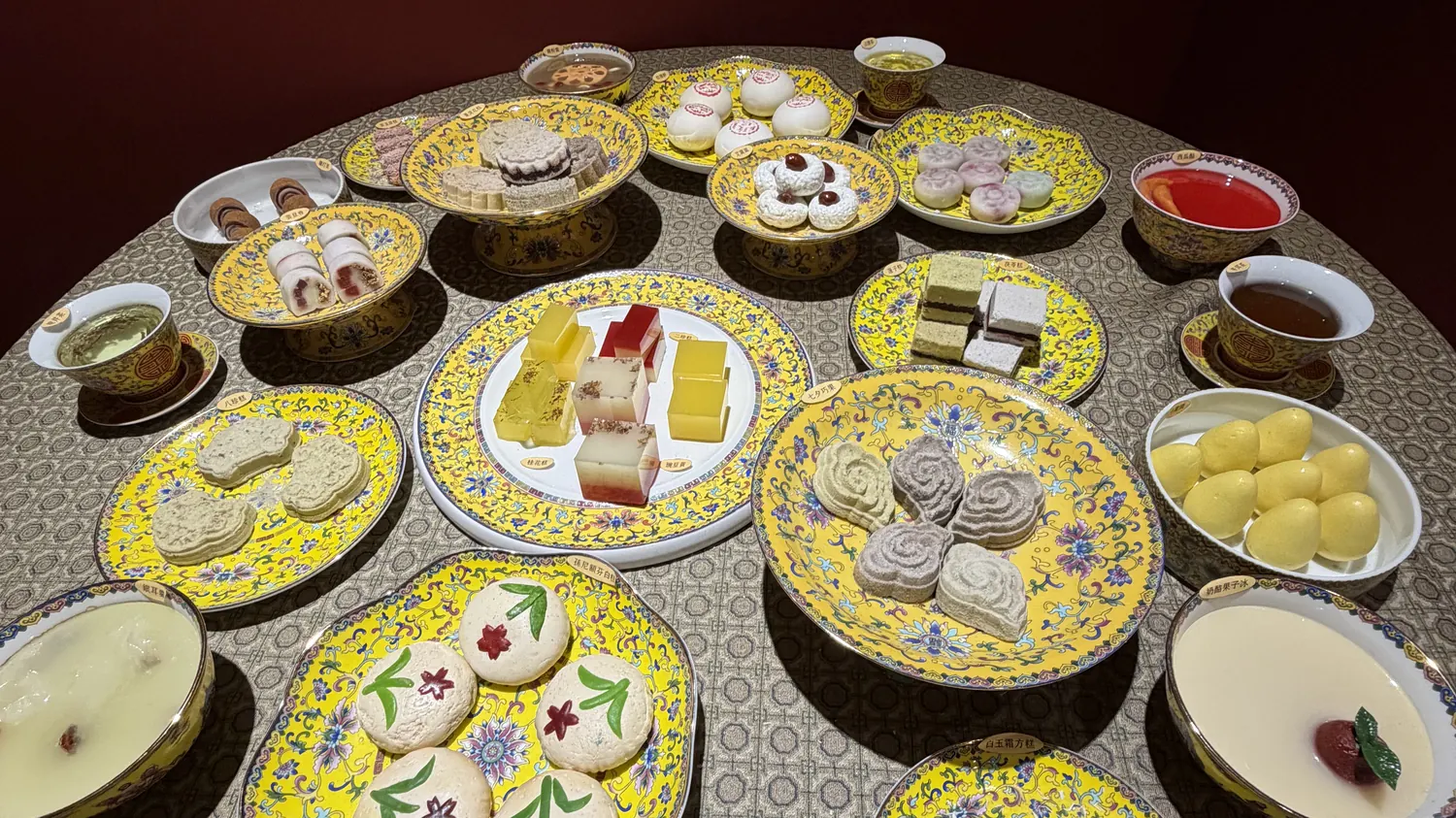
The round table on the cover is the centrepiece: a whole spread of court sweets recreated on yellow enamelled porcelain, each with a little name card in front of it — bazhen cakes, Qixi pastries, white jade frost squares, rose cakes, fruit-and-cream ice, silver-ear soup. Put lüdagun and the bazhen cakes side by side and you can see they solve one problem: when the tea is too thin, too clean or too bitter, something on the table has to catch it. Move along and Japan’s wagashi and Korea’s yakgwa are doing the same job, just sweet in a different key.
Afterwards, walk down to the old street. Pinglin’s is short and does not take long, and the tea-leaf egg rolls are the thing to buy — a packet eaten on the bus home lands neatly on top of everything the exhibition just said about what tea wants beside it.