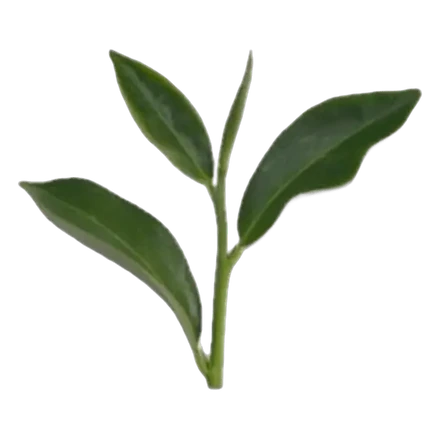
Baozhong begins inside Taipei: the Nangang Tea Processing Demonstration Centre
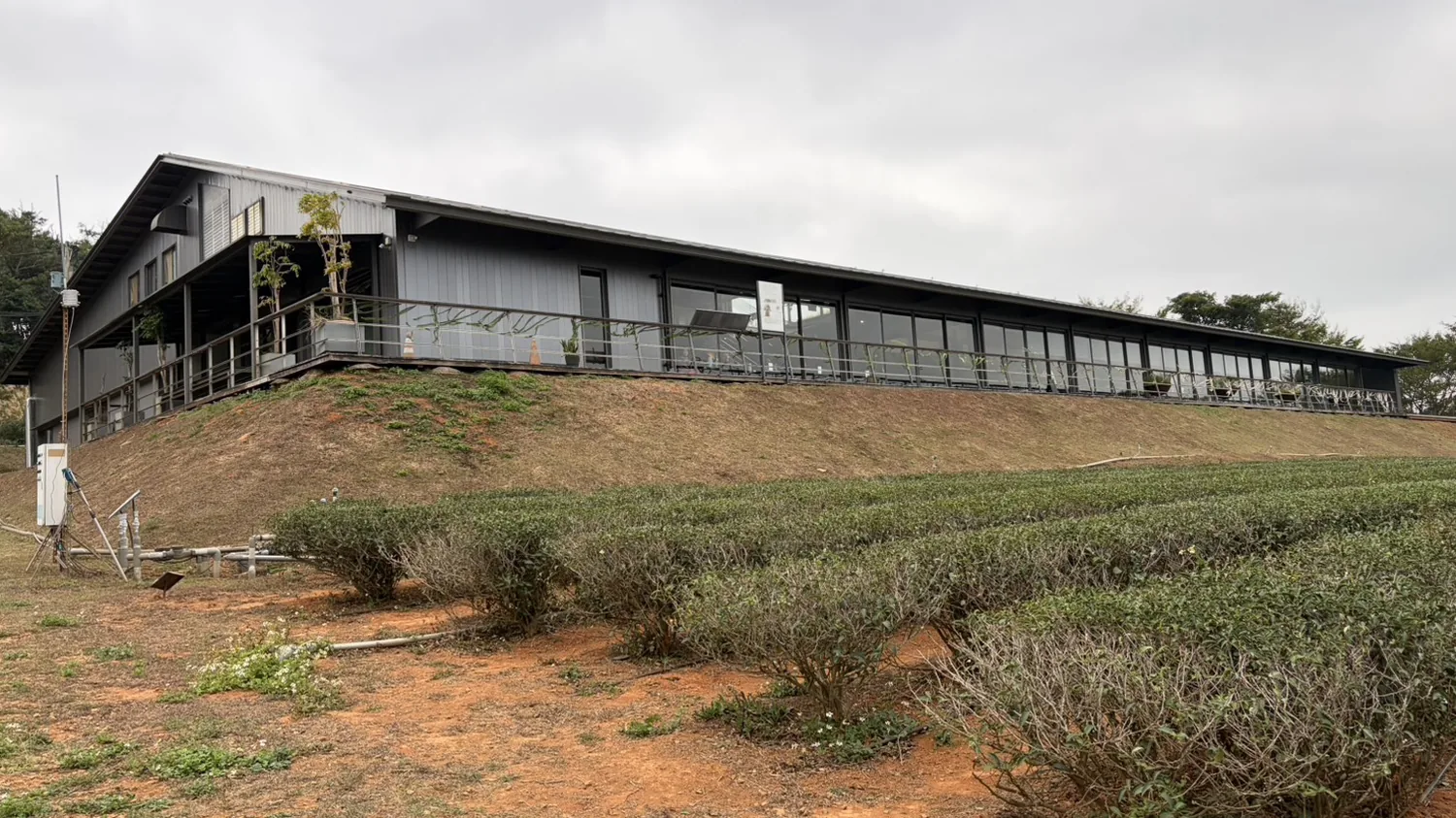
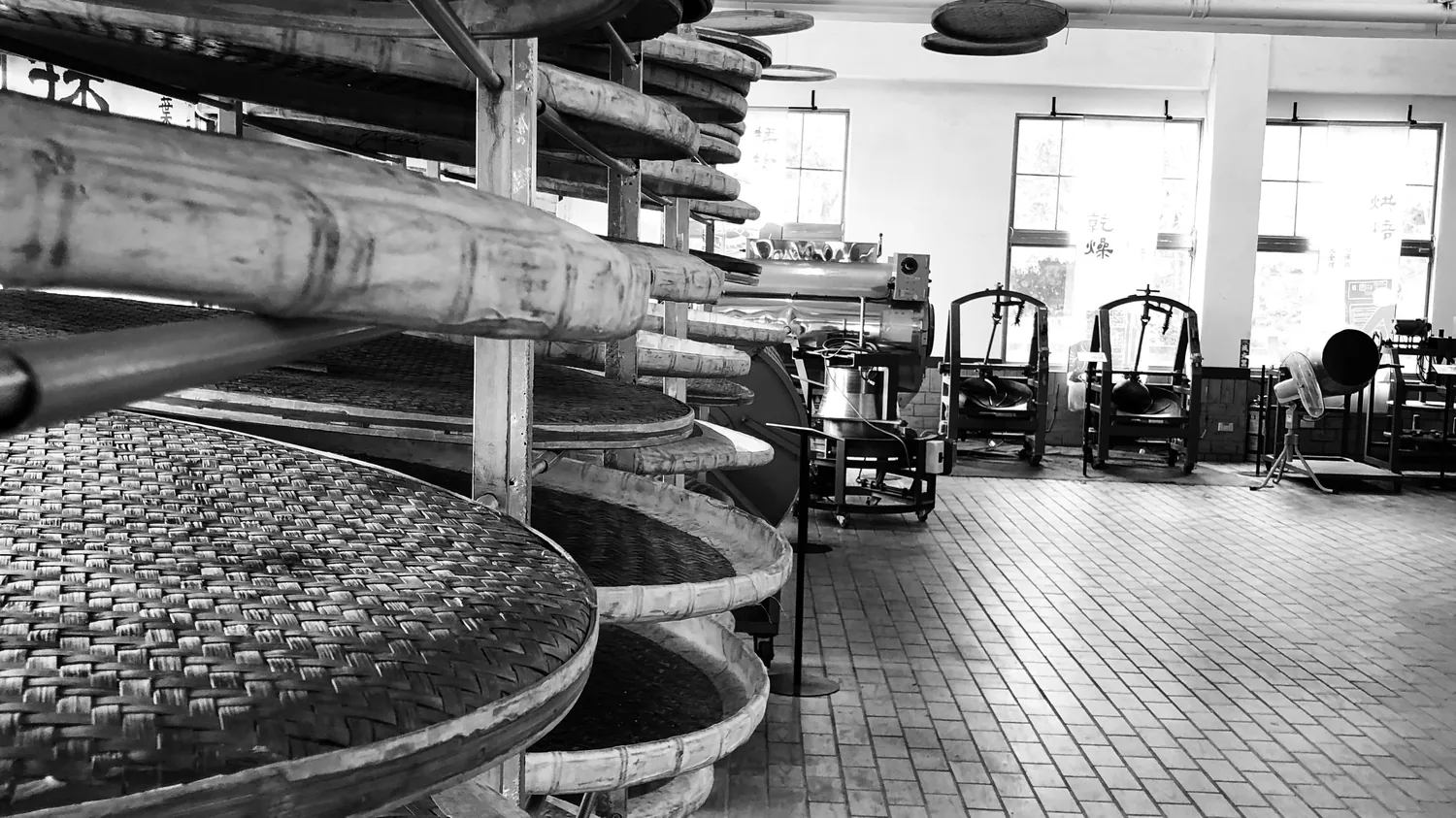
On the hillside on Jiuzhuang Street, woven bamboo trays are racked tier on tier with numbers inked on their rims, and more hang from the ceiling. Beside them stand the tumbling drum and the rolling machines. Baozhong was worked out in this district more than a century ago; the centre is free to visit and closed on Mondays.
The first thing inside is the trays. Woven bamboo discs racked tier on tier on wood and steel frames, numbers inked on their rims running up into the thirties, and more hung from the ceiling like discs suspended in mid-air. These are for withering — the fresh leaf is spread on them and left to lose water, the first step in making tea. The space is tall, light comes in from windows on both sides, and the floor is red brick.
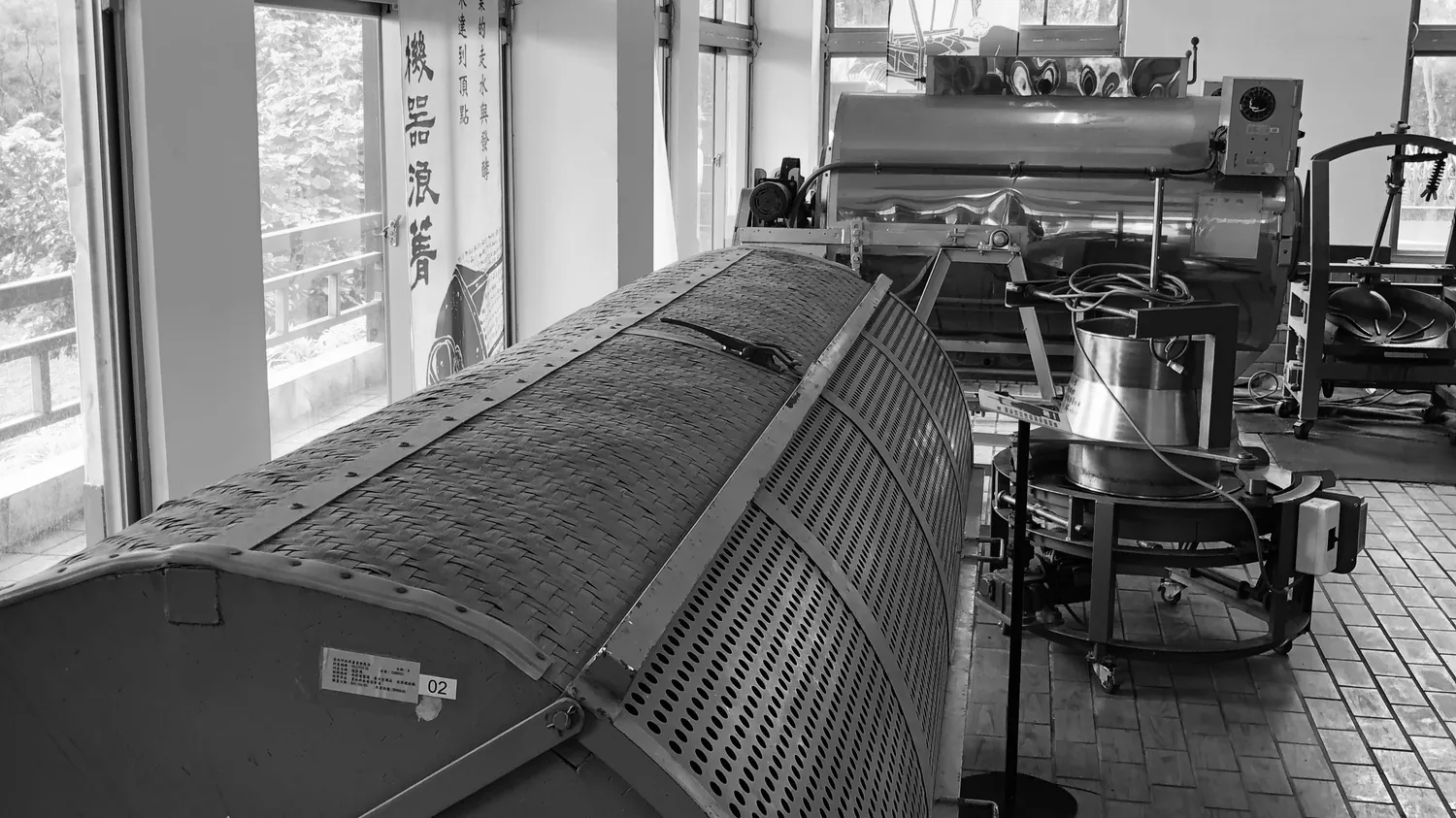
Further in are the machines. A long drum, half woven bamboo and half perforated steel, is the tumbling machine: the leaf goes inside and the turning drum keeps it moving and knocking against itself, which is how the degree of oxidation is steered. Rolling machines and drying equipment stand beyond it, and cloth banners on the walls — tumbling, hand rolling, drying — label one step to a bay.
Why this particular hillside
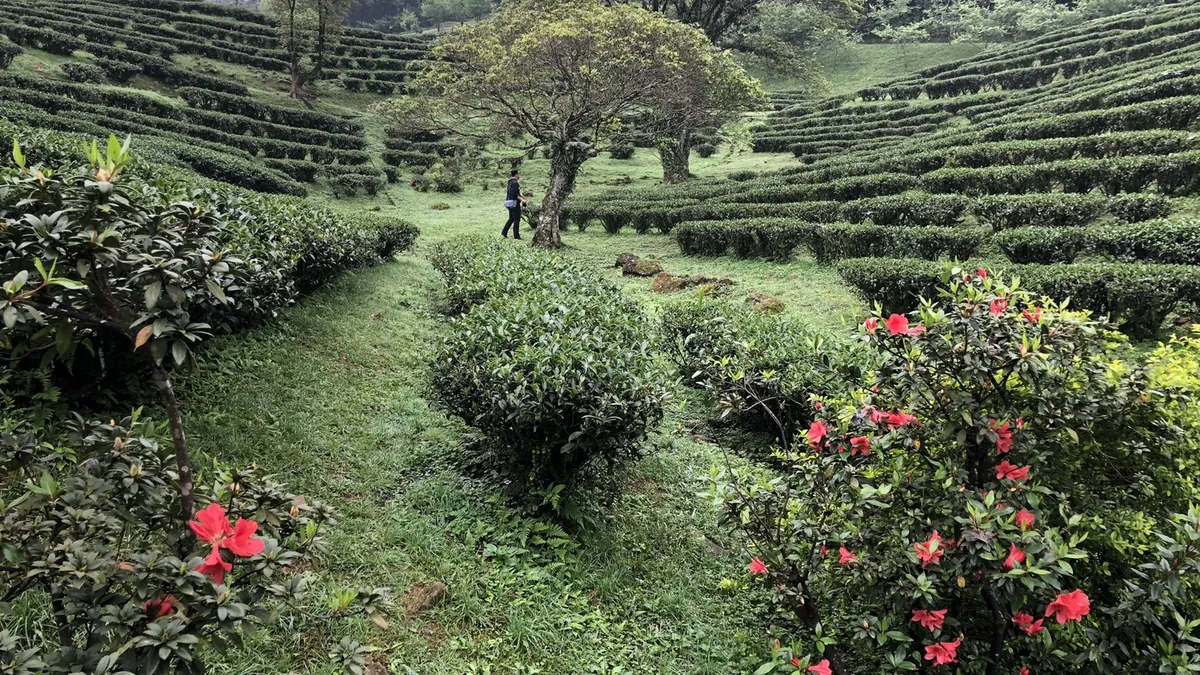
After the oolong export market fell away in the 1870s the leaf would not sell, and merchants turned to Baozhong instead. By the 1910s Wang Shui-jin and Wei Jing-shi, working in the Dakeng area of Nangang, had ground out the method: no scenting with flowers, the floral note coming from the leaf itself. That is what places Nangang in the history of Taiwanese tea. Taipei City opened this demonstration centre in 2002 so the process would have somewhere physical to be seen.
Tea rooms, a terrace, and a free pot
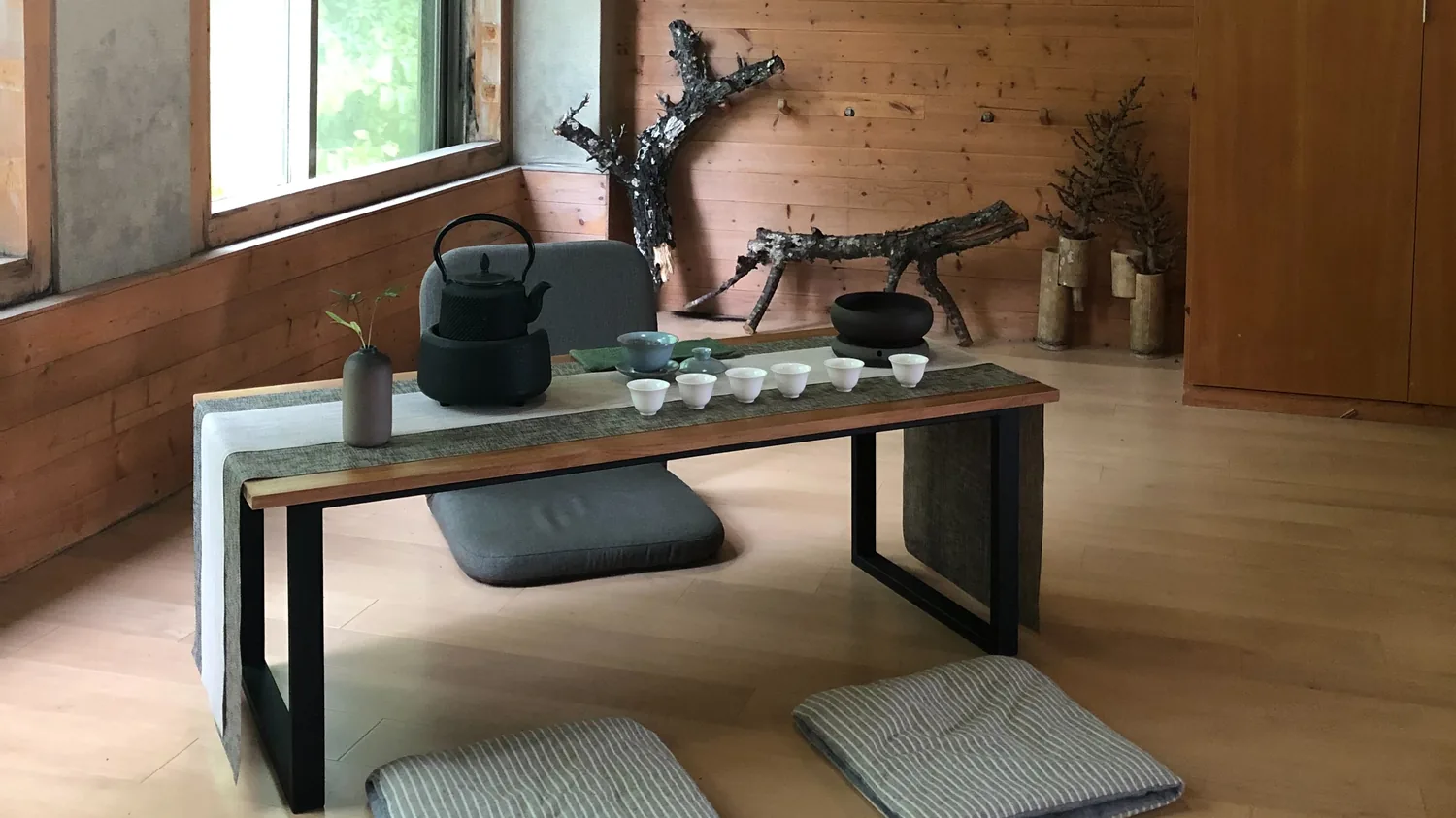
Inside there are three kinds of tasting room — Japanese, Chinese and English — and a high-ceilinged hall. The Japanese one is walled in bare timber, with an iron kettle and white porcelain cups on a low table, two cushions on the floor and bare branches set in the corner. Step outside to the viewing terrace: the hills opposite half in cloud, a stand of bamboo below. It was raining that day, the boardwalk soaked through, and the quiet was total.
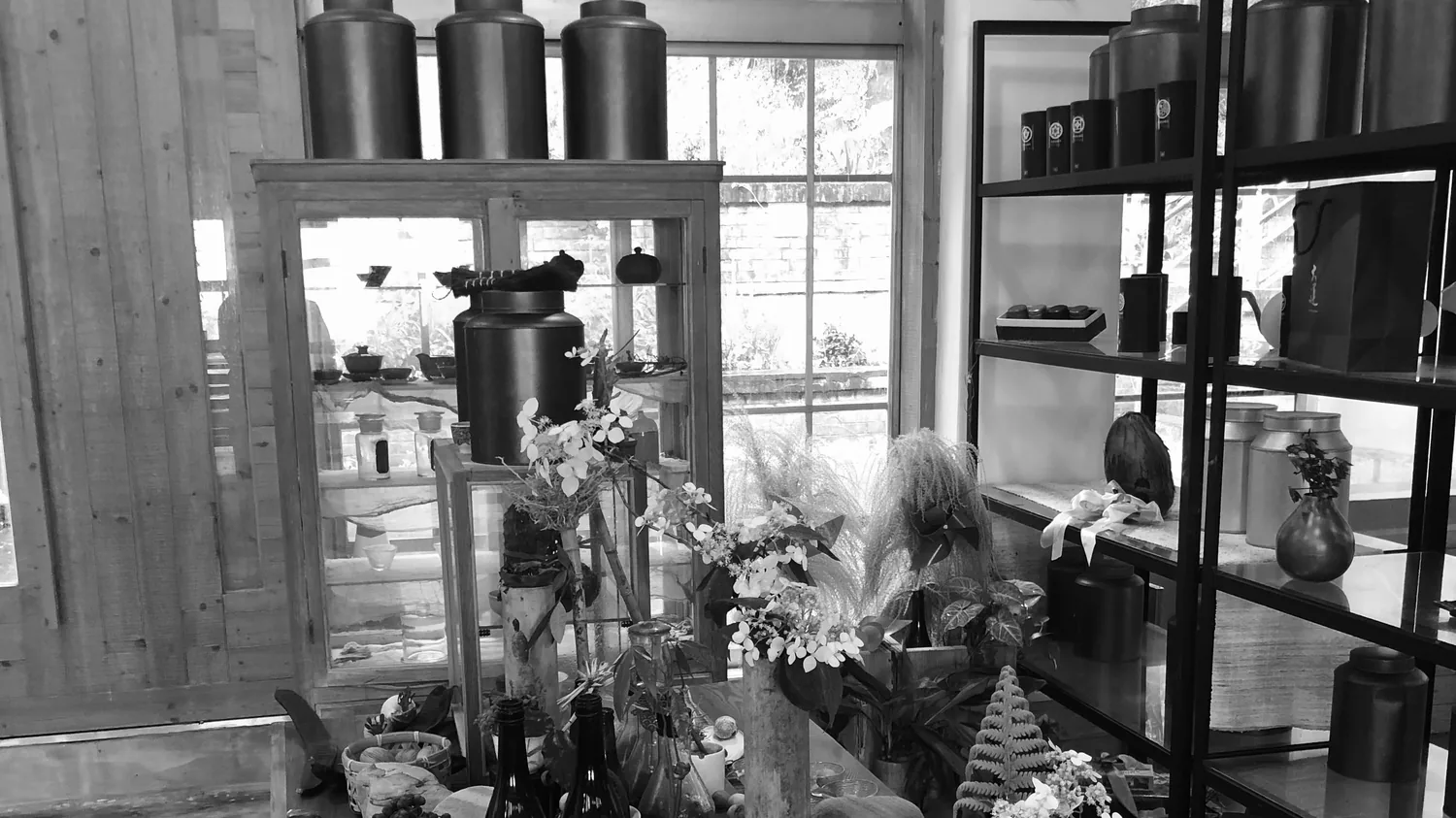
The shop is on the way out: a wall of shelves lined with dark tea caddies, a long table in the middle piled with dried flowers and paper packets of Baozhong. A grower is on site pouring tea for visitors, free of charge, and you may also bring your own set and brew somewhere on the grounds.
Getting there
| What | Detail |
|---|---|
| Address | No. 336, Section 2, Jiuzhuang Street, Nangang District, Taipei |
| Phone | (02) 2654-8026 |
| Opening hours | Tuesday to Sunday 09:00–17:00, closed Mondays; Lunar New Year announced separately. |
| Admission | Free all year |
| Site | About 2.7 hectares, with protected hillside trails around it. |
| Group bookings | Non-profit and public-interest events may apply by phone a week ahead; commercial events are not accepted. |