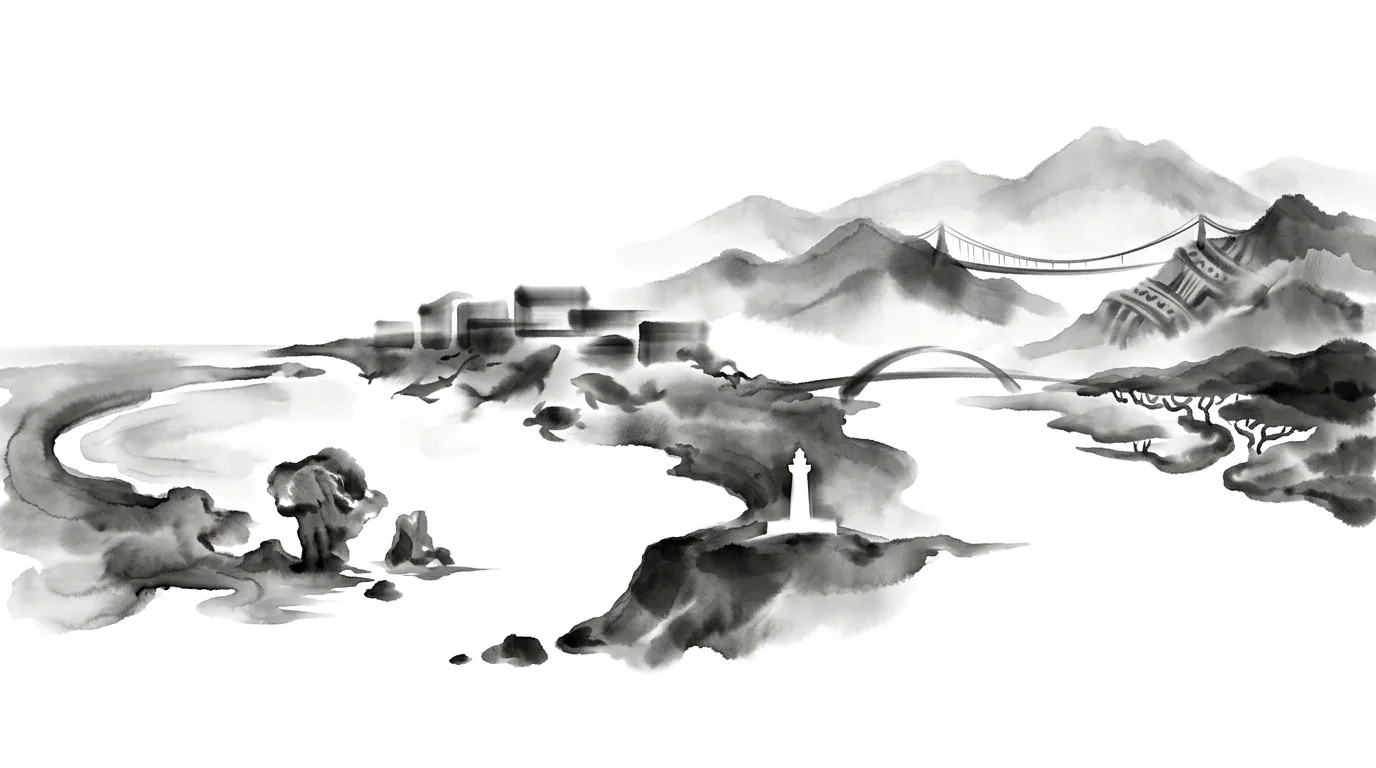
Gangkou tea from Manzhou is the southernmost tea in Taiwan, grown in sea wind. It brews long, tastes strong, and carries a bitterness that turns sweet — nothing like a high-mountain oolong. Kenting is on the way.
Map of this district
The map is served by Google and loads content from Google.
Itineraries1
A day with Gangkou teaDay tripHengchun → Manzhou → the Gangkou tea gardens, the old bushes, tea made by hand and sold on the spot → the Gangkou suspension bridge → Jialeshui → back to Hengchun or KentingOutput is tiny and mostly sold only at source. This is exactly what the site keeps saying: if you cannot buy it, we say so.
Sights and trails
The old Gangkou bushes
Century-old bushes standing where the sea wind reaches them. Salt and wind hold the plants down, so the leaves come thick and the flavour strong — that is what Gangkou tea is.
Jialeshui and the Gangkou bridge
The sea-carved rock at Jialeshui was cut by wind and wave. The Gangkou bridge, an old one, crosses the Gangkou river.
Things you can do yourself
Hand-made tea, tasted on the spot
Gangkou tea is mostly made and sold by the growers themselves; at the gardens you can taste and buy directly. Call first — someone may not be there every day.
What is on, and when
All yearWarm enough at the southern tip to pick several times a year — but the volume is small regardless, so ask before you go.
October–MarchThe season of the *luoshan* wind, strong enough to affect driving — and the very reason Gangkou tea tastes as it does.
Eat, sleep, travel
EatSeafood at Hengchun and Manzhou. Gangkou tea goes with the local snacks — there is no formal tea cuisine here.
SleepHengchun and Kenting have the most rooms. Manzhou is far quieter, with a few guesthouses.
TravelTake the Kenting Express from Zuoying HSR to Hengchun, then a local bus or taxi to Manzhou. By car, Provincial Highway 26. Buses in Manzhou are rare — rent a scooter or drive.