 Ruili & Ruifeng Tea
Ruili & Ruifeng Tea
Where to buy it
Flavour
Delicate aroma, mellow and sweet
Ruili and Ruifeng lie next to each other at around 1,200 metres, both in Meishan township.
Selling two place names together is common in Taiwan and usually means the leaf from both is processed as one batch. Blending is not the problem — small districts have to combine to make up a workable lot. The problem is labelling: you do not know the proportions.
⚠️ If you are chasing single-origin character, look for a single place name. If you want consistency and a price, a blend serves you better.
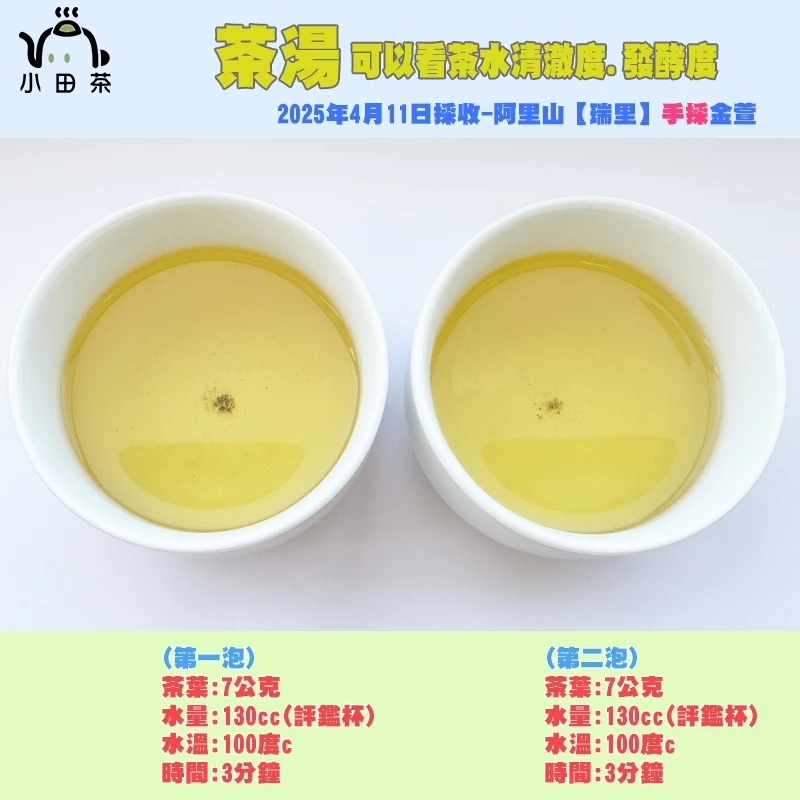
Oxidation two, firing two. Clear honey-yellow, wildflower and green herb.
Fair priceverified
One jin is 600 g. Below NT$800, be sceptical.
A reasonable range is NT$1,300–2,800 per 600 g. Below NT$800, ask more questions.
What to ask when buying this
One region can span 700 m to 1,700 m, with several times the price difference. The same name does not mean the same grade.
Spring and winter lots fetch the highest prices and the best aroma; summer and autumn are a step down in both.
If they will not let you taste but want you to buy 600 g of something expensive, walk away. It is the simplest and most effective filter there is.
A scannable producer record beats any verbal assurance.
Specifications
About the origin
High-mountain tea in Chiayi starts in 1976, when Lin Yun-fa, head of the Longyan community, planted seven thousand Ruanzhi oolong bushes — the county's first high garden. The provincial agriculture department came the following year with the Meishan township office and farmers' association, set up eight demonstration plots in Longyan, and the bushes did well. Confidence followed, and the planted area grew year on year to 2,000 hectares by 1997. The Meishan district takes in Taiping, Longyan, Bihu, Taixing, Ruili, Ruifeng and Taihe — about a thousand hectares in 1997, between nine hundred and thirteen hundred metres, with a wide day-night swing, cloud at dawn and dusk, and deep soil.
These figures will be updated if they change.
Brewing
Why this temperature
Ball-rolled oolong is tightly wound, and the first pour only reaches the outside of the pellet, so it needs water close to boiling to open at all. If it does not open, the later steeps swing between thin and heavy. The first and second steeps often take the same time or less, because the leaf does not truly unfurl until the second.
Temperatures follow the official category guidance. Source: TRES — Effects of water quality and temperature on tea liquor
Common mistakes with this tea
95°C or above. Too cool and the roast aroma never opens, leaving it flat.
Rolled-ball leaf needs the first infusion to open up; the second is then shorter.
Best drunk within two months.
The most common beginner regret is buying 600 g on the first try. Buy a jin only after you know you like it.
What to eat with it
Glutinous rice clings and the sweetness lingers on the tongue. A tea with some astringency clears it away.
This one is Taiwan-only — not available overseas
Here are the closest teas we can actually ship you:
Alishan High Mountain TeaAlishan 1700m 1700 m Milky Osmanthus2.0–4.0kLocation accuracy: named locality (23.5330, 120.6650). This marks the growing area, not one specific garden.
Alishan Tea Region9
What there is to do here
6 routes Two days possible Meishan: Ruili, Ruifeng, Taixing, Taihe・Zhuqi and Shizhuo・Dabang, Tefuye, Lijia — Tsou villages
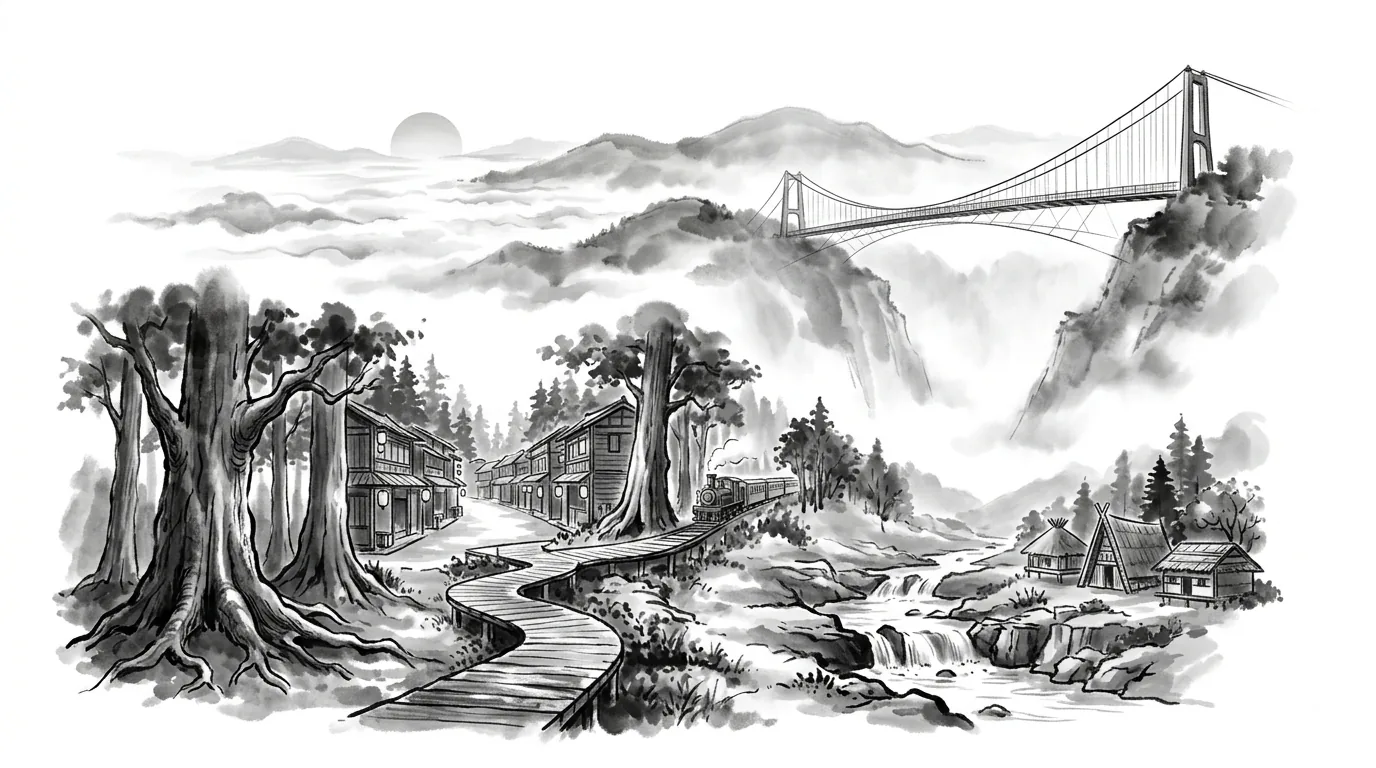
This district has the most itineraries, and nearly all of them run two days. Ruili, Ruifeng, Taixing and Taihe in Meishan are threaded together by old trails, bamboo, waterfalls and suspension bridges, and the guesthouses are the tea growers themselves. Further up are Zhuqi, Shizhuo and the Tsou villages. Every month of the year has its own crop.