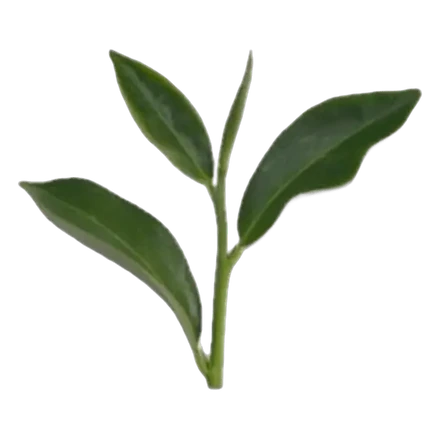
Mist, tea and a window on the world: the Taiwan Hakka Tea Culture Museum
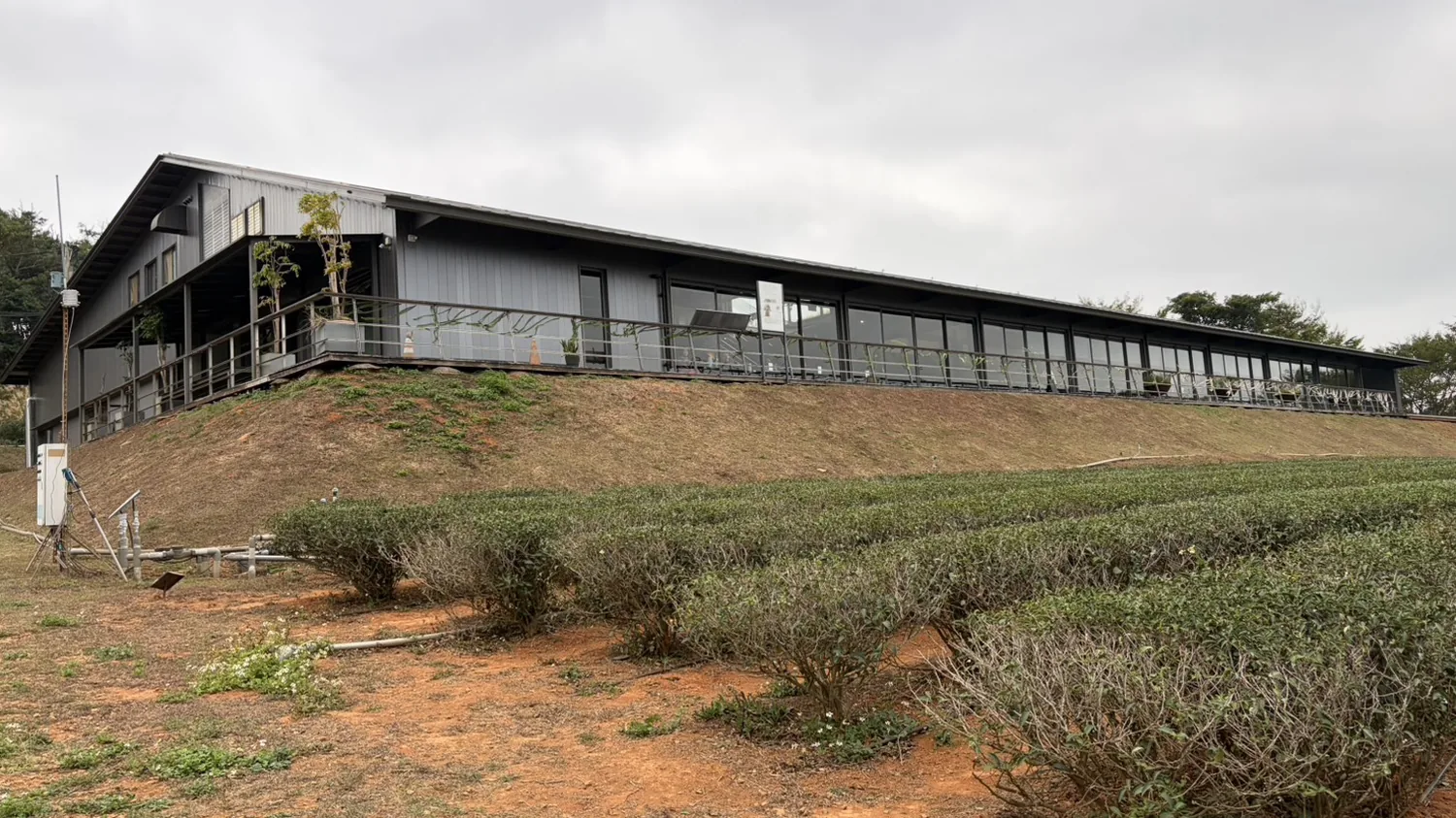
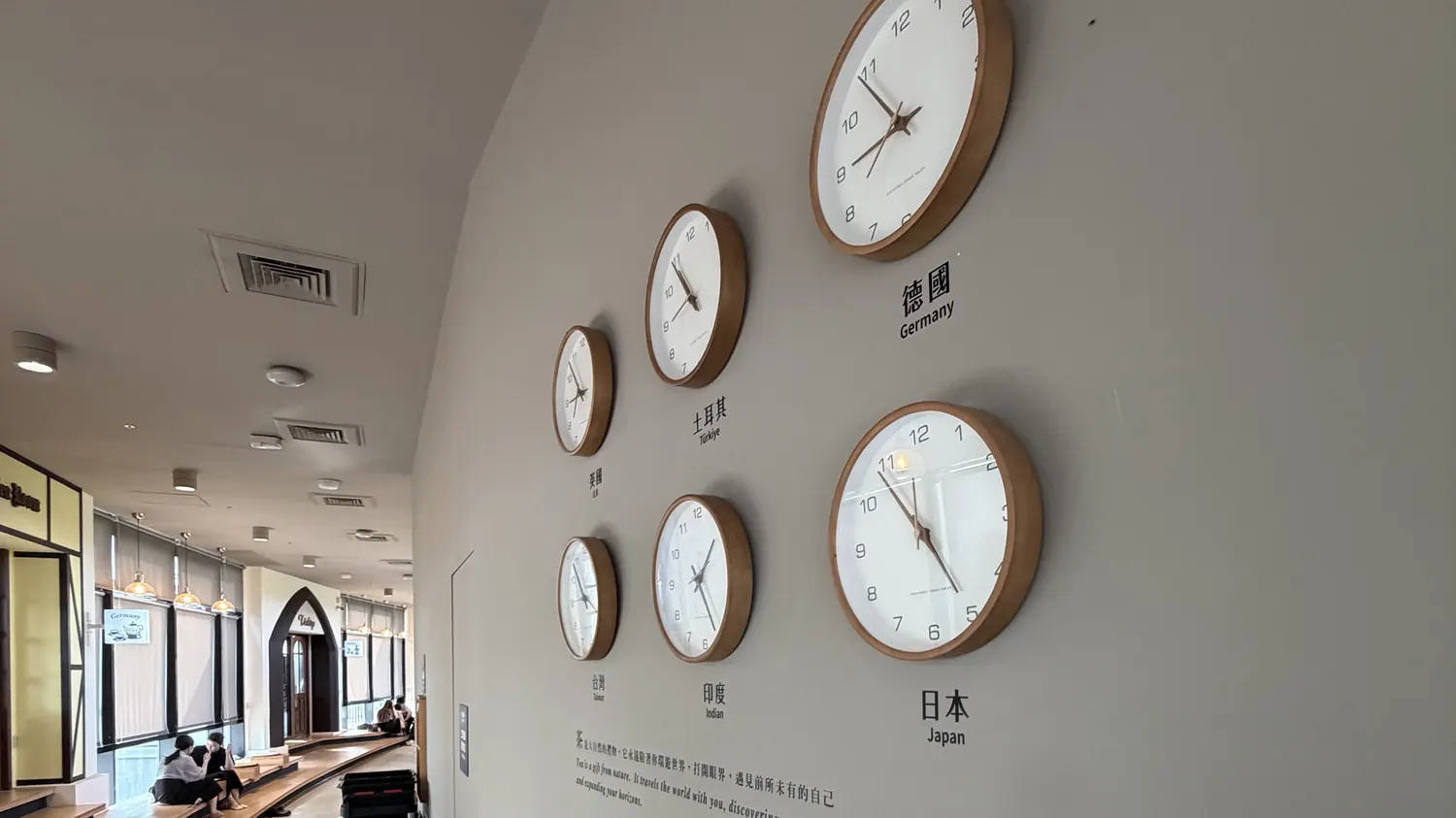
A new museum on the hillside at Longtan, Taoyuan, opened at the end of 2022. One half is where Hakka tea comes from — Oriental Beauty, the Chin-shin-dapan cultivar, the leafhopper that bites it. The other half keeps six countries’ time on the wall, with a private tea room each for Britain, Türkiye, Germany, Taiwan, India and Japan. The same leaf, and what it becomes depends on where it lands.
It opened at the end of 2022 and has a MUSE Design Awards gold to its name. The building is part of the exhibit: the corridor curves, one side glazed floor-to-ceiling onto the hills, the other a white wall carrying six clocks set to six countries’ time. Before you reach a single gallery, the museum has already told you what it is about.
Getting there, and what it costs
| What | Detail |
|---|---|
| Driving | One minute from the Gaoyuan interchange on National Freeway 3. |
| Public transport | MRT Yongning station, then bus 709 or Blue 44. |
| Admission | NT$160 full, NT$80 concession, with a further discount for Longtan residents. |
| Booking | Book on the official site — the private rooms and the DIY sessions have limited seatings. |
| How long | Half a day |
One insect, one cultivar, and Oriental Beauty
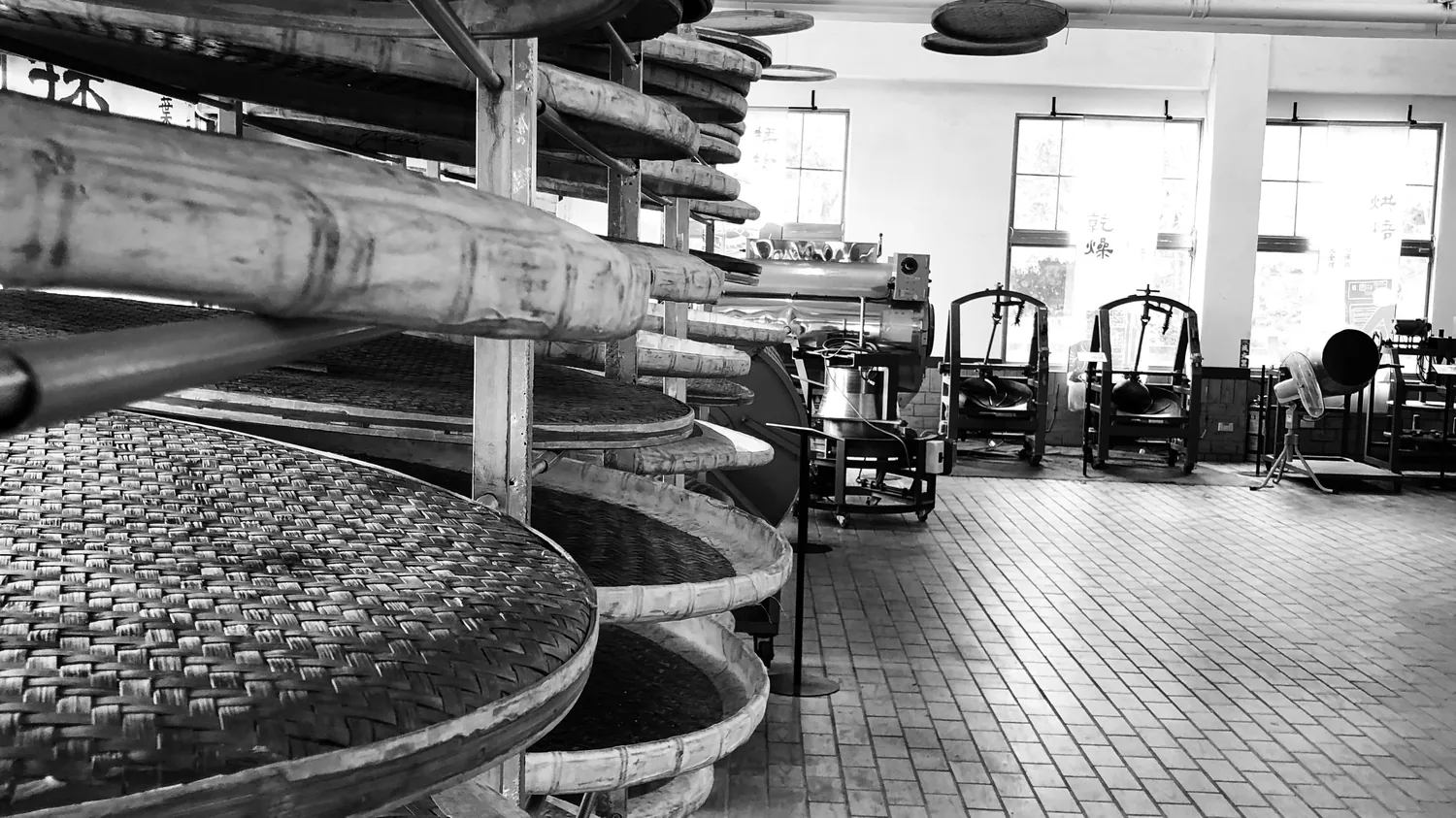
The best wall in the museum belongs to an insect: the tea green leafhopper, Jacobiasca formosana. Buds it has bitten stay small, curl and yellow, and the bush answers the damage with honey — the harder it is bitten, the sweeter the tea. Oriental Beauty is a tea made out of pest damage, which is counter-intuitive enough on its own.
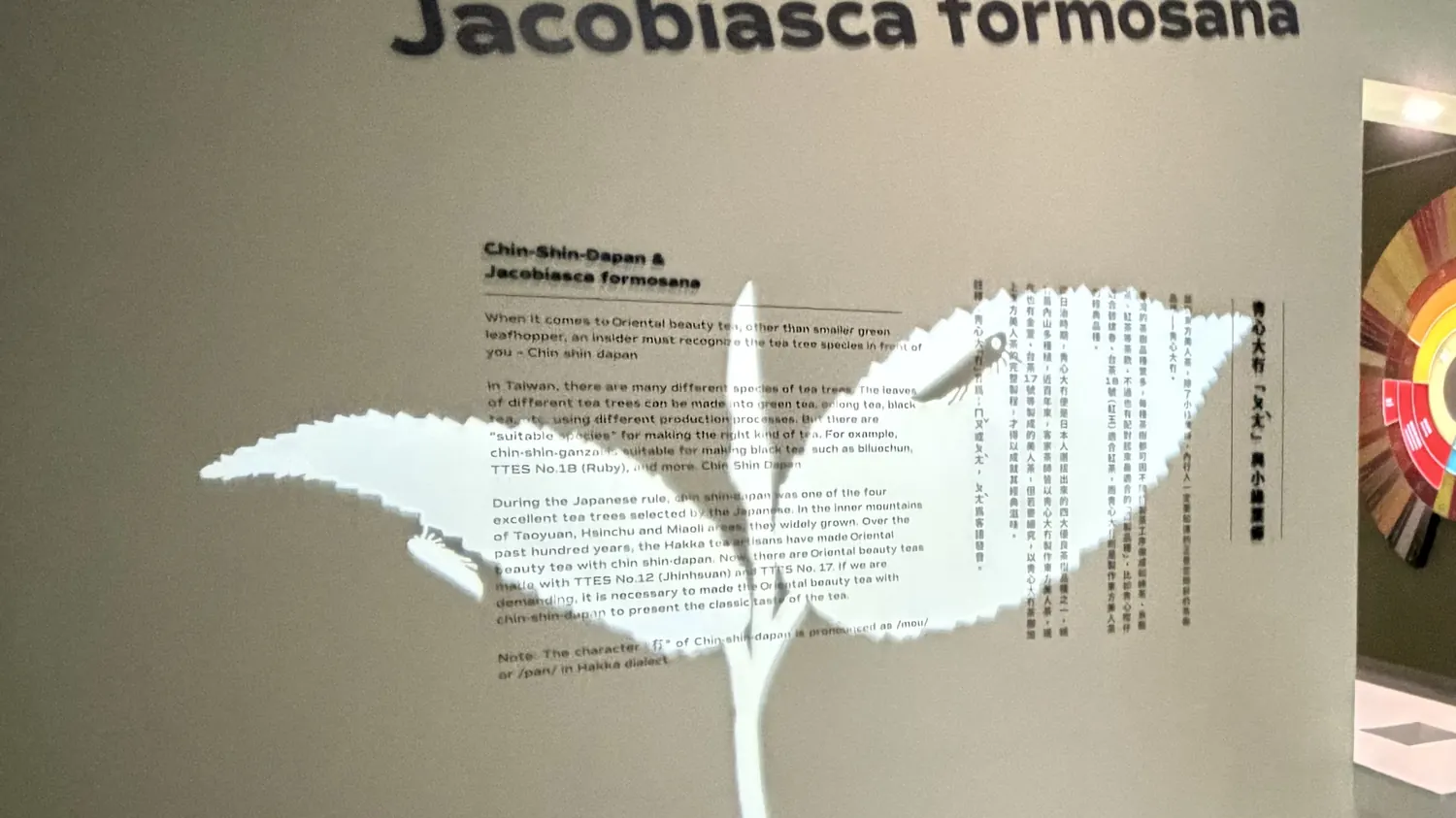
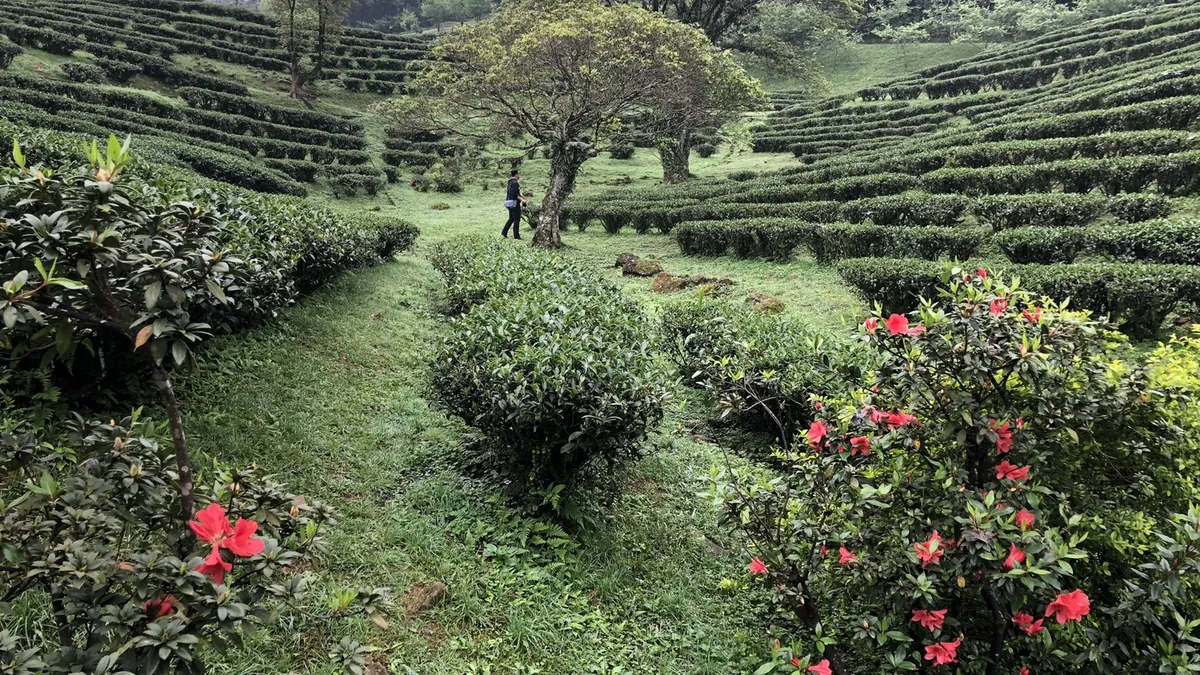
The other half is the plant. Four superior cultivars were selected under Japanese rule and Chin-shin-dapan was one of them, planted widely through the inner hills of Taoyuan, Hsinchu and Miaoli, where Hakka makers have used it for Oriental Beauty for more than a century. TTES No.12 (Jinxuan) and No.17 can be used too, but for the classic taste you come back to Chin-shin-dapan. Incidentally, the character 冇 is said /mou/ or /pan/ in Hakka.
The other Hakka face is suangan tea: a hollowed-out citrus packed with leaf, steamed and sun-dried over and over for years until it is hard enough to need a mallet. One is a sweet accident, the other is sour patience, and both are very Hakka.
Six clocks, six rooms
The wall on the cover is this place. Britain, Türkiye, Germany, Taiwan, India and Japan each get a themed private room, with a host to take you through it — the way one country drinks it. Walking in straight from the Hakka side makes the contrast land hard: the same leaf, shipped elsewhere, grew completely different manners around itself.
| Country | What you drink |
|---|---|
| Taiwan | High-mountain oolong, Oriental Beauty and house selections |
| Japan | Gyokuro sencha and cherry-blossom sencha |
| India | Assam, Darjeeling and masala chai |
| Britain | Earl Grey and English milk tea |
| Türkiye | Rose black tea |
| Germany | Black Forest fruit tea |
Besides the rooms there are tea ceremonies, DIY sessions and light bites. The DIY is hands-on grinding and mixing — Hakka leicha or matcha. The food is Japanese-style tea sweets, desserts and ice cream, matched to different teas. They also run seasonal six-country drinks and themed dishes, so the same place is not the same place in another season.
Kecha Lou: tea, served in compartments
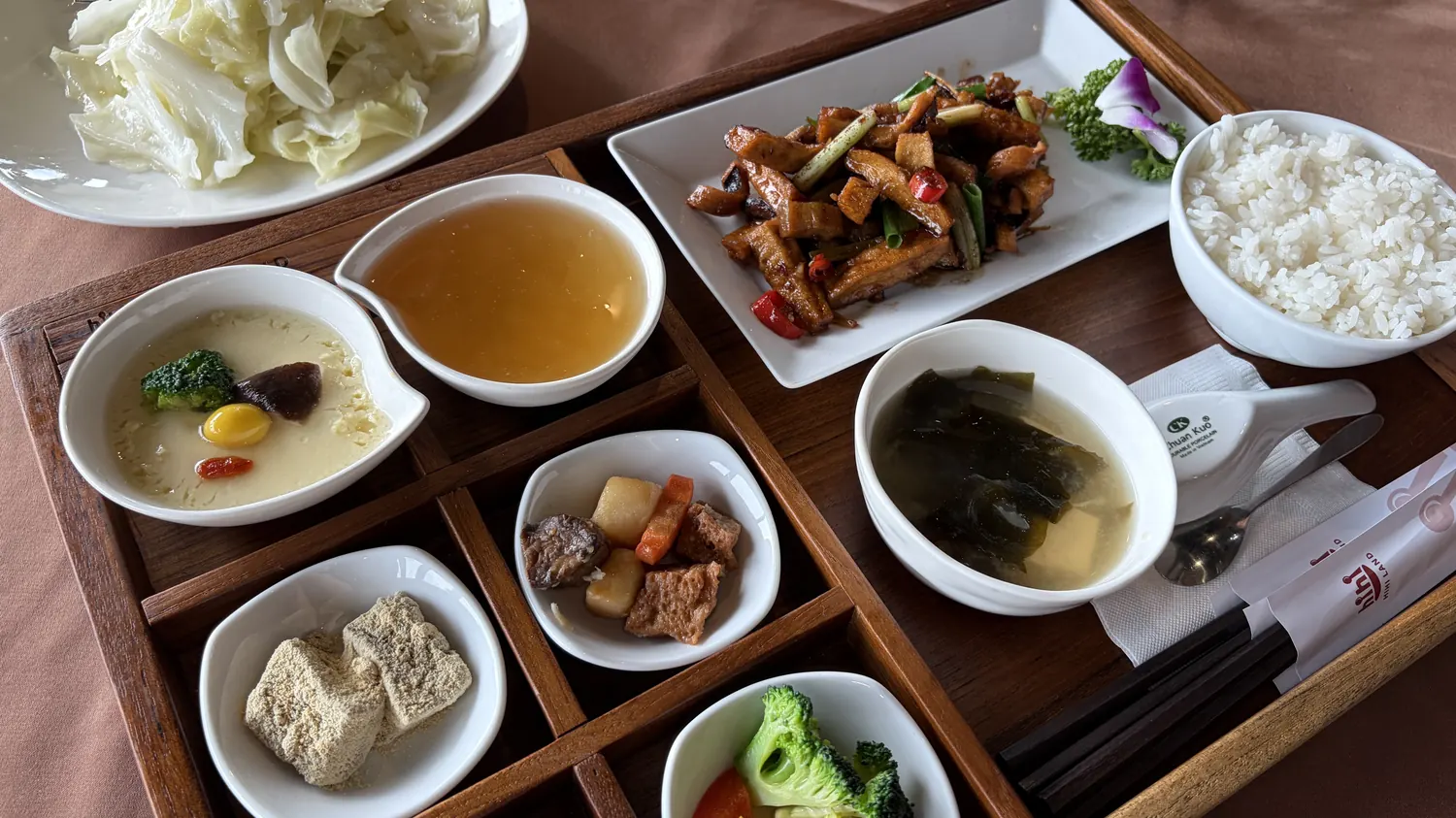
The restaurant inside is called Kecha Lou. The set comes in a Japanese-style wooden tray of small squares, one thing to a square: steamed egg custard, braised bits, mochi rolled in peanut powder, blanched greens, soup, rice, a dark-sauced stir-fry as the main, and a little bowl of clear tea beside it. It is genuinely finely done, and portioned so finely that you never tire of it on the way through.
To round out a full day, Longtan Pond or Daxi Old Street are both close. One is for walking, the other for eating, and both change the pace after a morning up the hill.